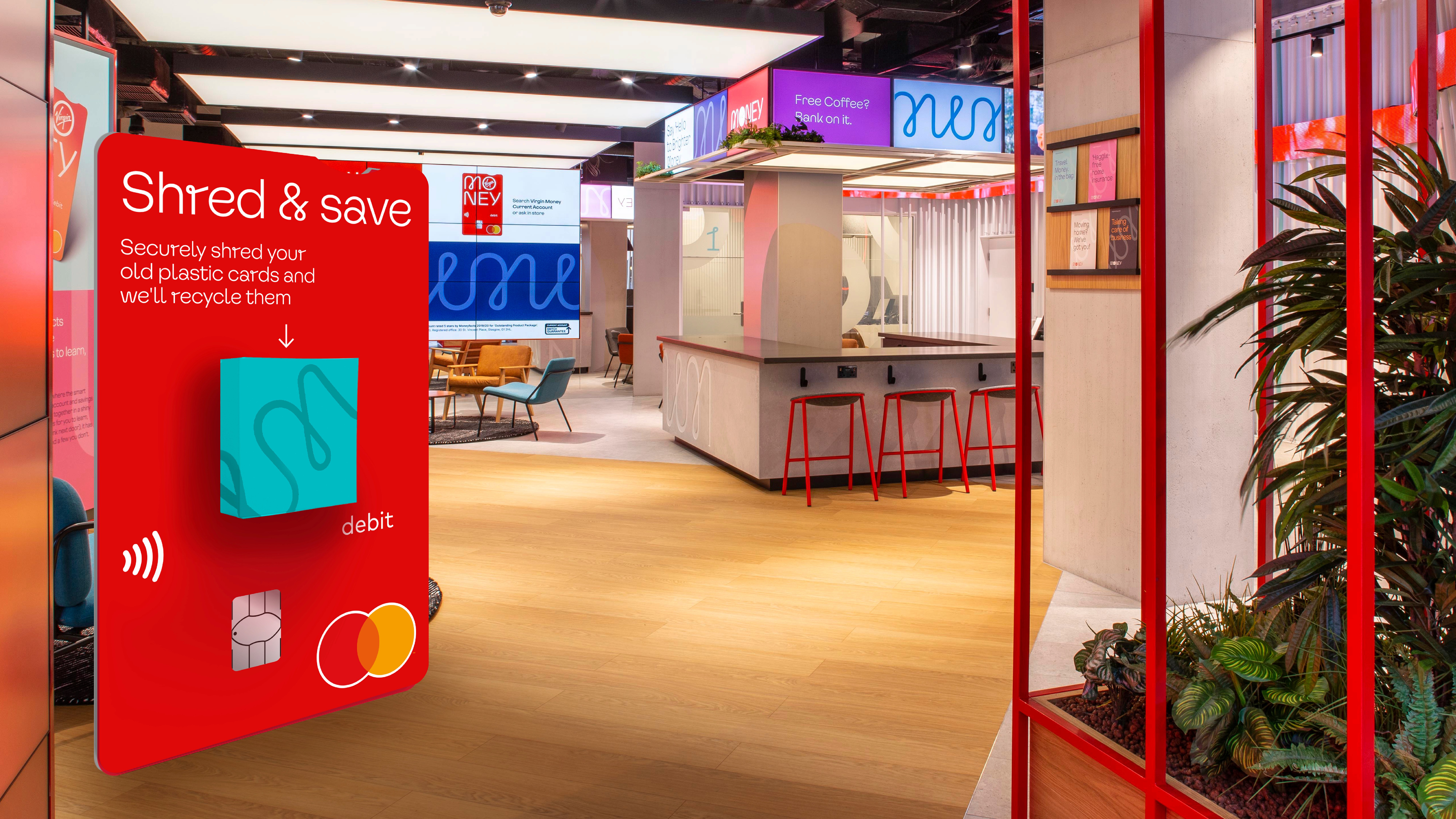
Customers were accumulating expired, replaced or unused debit and credit cards but didn’t know how to dispose of them safely.
While concern around fraud is high, behaviour doesn’t always follow. UK Finance reports millions of card fraud cases each year, yet many people still keep old cards at home due to uncertainty around secure disposal. Cutting them up feels unreliable, and there’s little clarity on what “safe” actually looks like.
As a result, cards are often left sitting in drawers or wallets, creating an unnecessary security risk and missing the opportunity for proper recycling.
For Virgin Money, this highlighted both a trust and behaviour challenge. How do you take something small but sensitive, remove the friction, and turn it into a clear, visible action customers feel confident about.
Customers were accumulating expired, replaced or unused debit and credit cards but didn’t know how to dispose of them safely.
While concern around fraud is high, behaviour doesn’t always follow. UK Finance reports millions of card fraud cases each year, yet many people still keep old cards at home due to uncertainty around secure disposal. Cutting them up feels unreliable, and there’s little clarity on what “safe” actually looks like.
As a result, cards are often left sitting in drawers or wallets, creating an unnecessary security risk and missing the opportunity for proper recycling.
For Virgin Money, this highlighted both a trust and behaviour challenge. How do you take something small but sensitive, remove the friction, and turn it into a clear, visible action customers feel confident about.
We created an in-branch intervention that made secure disposal simple, immediate and visible.
Working with the team, we developed the “Shred & Save” concept, a clearly branded, physical touchpoint within the branch that allowed customers to securely shred their cards on the spot.
The focus was on making the process tangible and reassuring. Customers could see exactly what was happening, removing any doubt around security, while also reinforcing responsible recycling.
By turning an unclear, low-priority task into a guided in-store interaction, we:
— Removed ambiguity around how to safely dispose of cards
— Reinforced Virgin Money’s position as a security-conscious, trusted brand
— Encouraged action through a simple, intuitive experience
— Created a meaningful in-branch engagement moment
The result was a small but effective service design intervention that addressed a real behavioural gap, while strengthening trust through action rather than messaging alone.